Pimple marks and dark spots
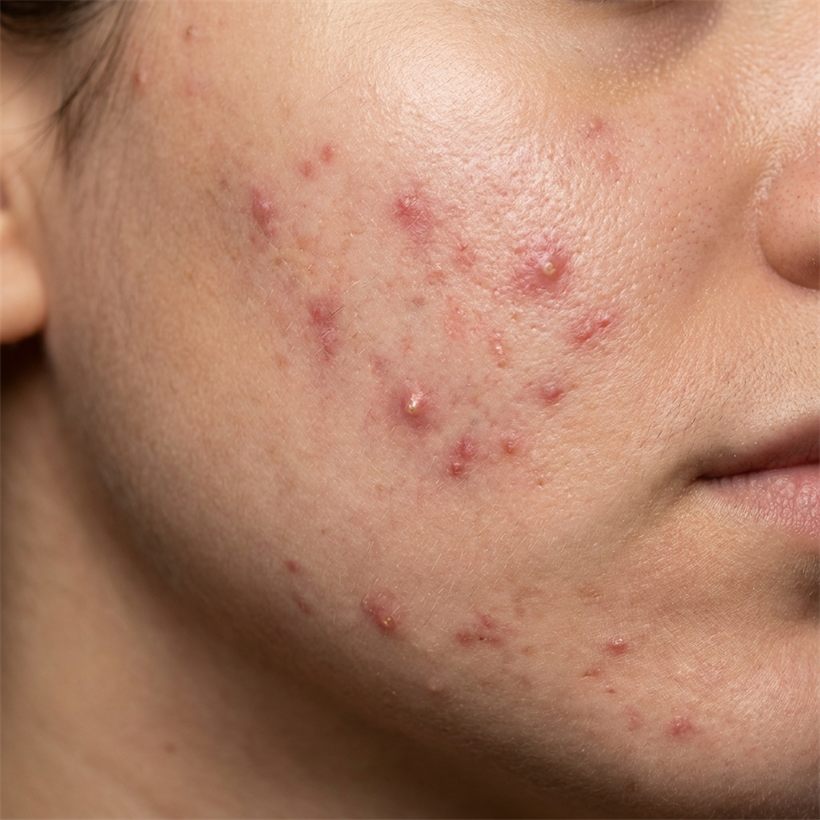
For most of my patients with brown skin, acne itself is not the main distress — it is the brown map left behind afterwards. The good news is that marks do fade. The bad news is how much slower it is than anyone wants.
Post-inflammatory hyperpigmentation (PIH) is what happens when inflammation triggers melanocytes to overproduce pigment. It is much more prominent in skin types IV to VI, which is why this is such a dominant concern in Kerala and much less discussed in Western skincare content.
First: mark, or scar?
This determines everything, so check before you spend money. Run a finger over it. If the surface is smooth and only the colour differs, it is a mark and creams will work. If there is a dent or depression, it is a scar and needs a procedure — see acne scar treatment.
There is also a red-mark variety: post-inflammatory erythema, which is flat and pink or red rather than brown. It is more common in lighter skin, fades on its own over three to six months, and responds to niacinamide and gentle vascular-targeting lasers rather than pigment treatments.
What actually fades brown marks
| Ingredient | Why it helps | How to use |
|---|---|---|
| Sunscreen | Prevents marks darkening further. Without it, everything else is undone. | SPF 30+ daily, reapplied. Non-negotiable. |
| Azelaic acid 15–20% | Treats acne and pigment together. Safe in pregnancy. | Once or twice daily. My usual first choice for this problem. |
| Niacinamide 4–5% | Reduces pigment transfer, well tolerated | Morning or night |
| Retinoids | Speed cell turnover and disperse pigment; also prevent new acne | Nights, build up slowly |
| Vitamin C | Antioxidant, mild brightening | Mornings, under sunscreen |
| Alpha arbutin, kojic acid, tranexamic acid | Additional pigment inhibitors | Useful in combination products |
| Hydroquinone | Strongest, prescription | Short defined courses under supervision only |
| Chemical peels | Accelerate the process | Clinic, series of 4–6 |
The timeline, honestly
- Untreated: three to twelve months, sometimes longer for deep marks.
- With treatment: two to four months for noticeable fading, four to six for substantial clearing.
- Nothing works in two weeks. Any product promising that is either a steroid or a marketing claim.
Take fortnightly photos in identical lighting. Marks fade so gradually that people genuinely cannot perceive their own progress — photographs regularly settle the argument in the patient's favour.
What makes marks worse
- Picking and squeezing. More inflammation equals more pigment, and deeper inflammation risks a permanent scar instead of a temporary mark.
- No sunscreen. UV darkens existing marks directly. This is the biggest single reason marks persist for years.
- Scrubbing. Irritation triggers more pigment in brown skin.
- Lemon, toothpaste, raw turmeric. Same reason.
- Leaving the acne untreated. Every new pimple creates a new mark. Controlling the acne is the fastest route to fewer marks.
The prevention that matters most
Marks are the receipt for inflammation. So the single most effective anti-mark strategy is treating acne early and well enough that lesions resolve quickly and quietly. Patients who chase marks while ignoring active acne are fighting a losing battle — they are removing yesterday's marks while manufacturing tomorrow's.
If you take one thing from this: get the acne under control first, wear sunscreen every day, and stop touching your face. The marks then fade largely on their own, and the creams simply speed up a process you have finally stopped interrupting.
Frequently asked questions
Three to twelve months untreated, or two to four months for noticeable fading with treatment and four to six for substantial clearing. Nothing genuinely fades marks in two weeks.
Azelaic acid 15–20% is an excellent first choice because it treats acne and pigment together and is safe in pregnancy. Niacinamide, retinoids and vitamin C also help. But daily sunscreen does more than any of them — without it the rest is undone.
Run a finger over it. A mark is flat — only the colour differs, and creams work. A scar has depth, with a dent or depression, and needs a procedure such as subcision, microneedling or TCA CROSS.
Yes, substantially. Ultraviolet light directly darkens existing marks, so skipping sunscreen is the most common reason marks persist for years despite creams.
Deeper skin tones have more reactive melanocytes, producing brown post-inflammatory hyperpigmentation. Lighter skin more often develops post-inflammatory erythema, which is pink or red and usually fades faster on its own.
Only partially. Every new pimple creates a new mark, so you would be removing old marks while making new ones. Controlling the acne first is the fastest route to clearer skin overall.