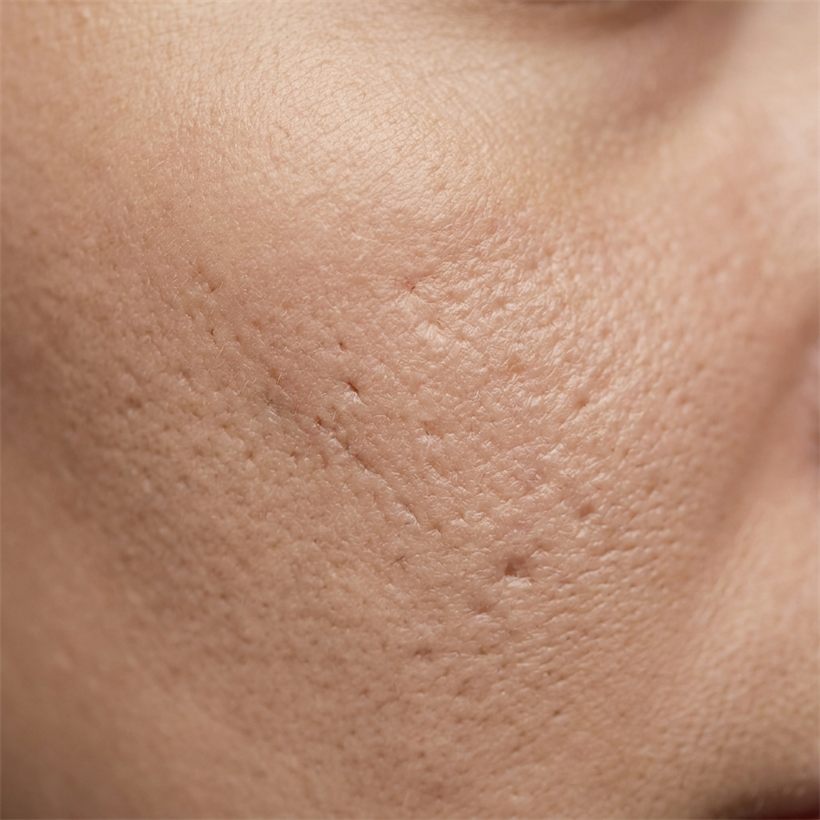
A daily skincare routine for Kerala's climate
Almost every routine you find online was written for a cold, dry country. Follow it here and you will end up greasy, congested and breaking out. This is the version I actually give my patients in Kannur.
There is a reason the elaborate ten-step routines do not work here. They were designed for climates where the air pulls moisture out of your skin. In Kannur, the air is already saturated — relative humidity sits between 70 and 90 percent for most of the year. Your skin's problem is not usually a lack of water. It is sweat, sebum, occlusion and yeast.
So the principles invert. Layering is the enemy. Lightness wins. Here is the routine that survives our weather.
The short version
Morning: cleanse → (optional treatment serum) → light moisturiser → sunscreen.
Night: cleanse → treatment (retinoid or acid, alternate nights) → moisturiser.
That is it. Four steps. Anything more is optional, and in this humidity, often counterproductive.
Step 1 — Cleansing, and the mistake nearly everyone makes
The mistake is over-cleansing. When your face feels oily by 11am, the instinct is to wash again. And again. By evening the barrier is stripped, so the skin produces more oil to compensate, and you are locked in a cycle you blame on "oily skin".
Wash twice a day: morning and night. If you have been sweating heavily — after a workout or a long commute — rinse with plain water instead of a third wash.
| Your skin | Cleanser to use |
|---|---|
| Oily, acne-prone | Gentle gel cleanser; salicylic acid 2% wash a few times a week if congested |
| Combination | Mild gel or non-foaming cleanser, same product morning and night |
| Dry or eczema-prone | Non-foaming cream or syndet cleanser; plain water in the morning is fine |
| Sensitive, easily red | Fragrance-free, low-foam, lukewarm water only |
Two things to avoid regardless of type: hot water, which strips lipids fast, and anything that leaves your face feeling squeaky and tight. Tight is not clean. Tight is damaged.
Do you need double cleansing?
Only if you wear heavy makeup or water-resistant sunscreen. Then a micellar water or light cleansing oil first, followed by your normal cleanser. Otherwise it is an unnecessary step that dries some people out.
Step 2 — Treatment: pick one, not four
This is the step people ruin by enthusiasm. You do not need vitamin C, niacinamide, an AHA, a BHA and a retinol. You need whichever one matches your main problem.
- Main problem is dark marks or dullness → vitamin C in the morning, or niacinamide 5% either time.
- Main problem is active acne → adapalene or benzoyl peroxide at night. See the acne guide.
- Main problem is texture, pores and early lines → a retinoid at night, two or three times a week.
- Main problem is melasma → do not self-treat. Get it diagnosed; the wrong active makes it worse.
- Main problem is redness or sensitivity → no active at all for a month. Just cleanser, moisturiser, sunscreen.
Alternate nights when you are using anything strong. Retinoid on Monday, acid on Thursday, plain moisturiser the rest of the week. Skin needs recovery days, and in this humidity irritation flares fast.
Step 3 — Moisturiser: yes, even if you are oily
The most common objection I hear: "Doctor, my skin is already oily, why should I use a moisturiser?" Because oil and water are different things. Sebum on the surface does not stop water escaping from the layers beneath, and a dehydrated barrier is what triggers reactive oil production in the first place.
What matters here is texture, not whether you use one:
- Oily / acne-prone: an oil-free gel, labelled non-comedogenic. Hyaluronic acid or glycerin based.
- Normal to combination: a light lotion.
- Dry, or on a retinoid: a cream with ceramides.
- Fungal acne / itchy bumps: avoid coconut oil, and check for isopropyl myristate and heavy esters in the ingredient list — these feed Malassezia. More in the monsoon infections guide.
Step 4 — Sunscreen, the non-negotiable one
Everything else on this list is optional. This is not. Applied every morning, sunscreen prevents tanning, blocks the pigmentation you are trying to treat from coming straight back, and slows collagen loss.
In our humidity, use a gel, fluid, or "matte finish" formulation rather than a cream. Chemical or hybrid filters usually feel far better than heavy mineral ones here, though mineral is the safer choice for genuinely reactive skin. Two finger-lengths for the face and neck. Reapply every three to four hours outdoors — a compact or spray makes this realistic over makeup. Full detail in the sunscreen guide.
The monsoon routine
From June through September, three things change: humidity peaks, fungal infections multiply, and everyone assumes sunscreen is unnecessary because they cannot see the sun.
Monsoon adjustments
- Keep the sunscreen. UVA passes through cloud. Monsoon tanning is real.
- Go lighter on moisturiser, not heavier. A gel is usually enough.
- Dry skin folds properly — under the breasts, groin, between toes, neck creases. Damp folds are where tinea starts.
- Change out of wet clothes immediately. The single most effective fungal prevention there is.
- Do not share towels, and wash them frequently in hot water.
- Itchy, ring-shaped or uniform small bumps? That is likely fungal, not acne. Anti-acne creams will not touch it, and steroid creams will make it dramatically worse.
Building it up without wrecking your skin
Do not start everything on the same day. When something reacts, you will have no idea what caused it.
| Week | Add this |
|---|---|
| 1–2 | Cleanser, moisturiser, sunscreen only. Let the barrier settle. |
| 3–4 | Add one morning serum (vitamin C or niacinamide), if you want one. |
| 5–6 | Add your night treatment — twice a week to begin with. |
| 7+ | Increase night treatment frequency slowly, only if there is no irritation. |
Patch test anything new on the side of the jaw for three nights before it goes on your whole face.
Things that do not belong in your routine
- Daily face packs. Weekly at most, and never anything that dries to a hard crust on acne-prone skin.
- Gritty scrubs. Especially walnut and apricot shells — the fragments are jagged and cause micro-tears.
- Toner "to close pores". Pores are not doors. Alcohol-based toners just irritate.
- Any cream a relative brought from abroad without a label. This is how steroid-damaged faces begin.
- DIY lemon, baking soda, toothpaste, raw turmeric. Turmeric masks in particular can cause allergic contact dermatitis and temporary staining.
How to know it is working
Take a photograph in the same light, same angle, once a fortnight. Memory is unreliable and improvement is gradual — patients regularly tell me nothing has changed while their photos from eight weeks earlier say otherwise.
Give any new routine twelve weeks before you judge it. If you are getting steady irritation, burning, or new breakouts after four to six weeks, that is a signal to simplify and get assessed rather than add another product.
Frequently asked questions
Yes, but the texture matters. Use an oil-free, non-comedogenic gel. Skipping moisturiser dehydrates the barrier, which triggers more reactive oil production — the opposite of what you want.
Yes. UVA rays penetrate cloud cover and are the main driver of tanning, pigmentation and photoageing. Monsoon months are when I see the most preventable tanning, precisely because people stop.
Four: a cleanser, a moisturiser, a sunscreen, and at most one treatment product matched to your main concern. Everything beyond that is optional and, in humid weather, often makes things worse.
Not in the same application. Use vitamin C in the morning and the retinoid at night, and only after your skin tolerates each one separately. Starting both at once is the most common cause of the irritation I see.
No. Twice daily is the ceiling. If you are sweaty, rinse with plain water. Over-washing strips the barrier and increases oil production.
Twelve weeks for a fair judgement. Hydration improves in two weeks, texture around six, and pigmentation from eight to twelve weeks onwards.