Acne scar treatment, honestly explained
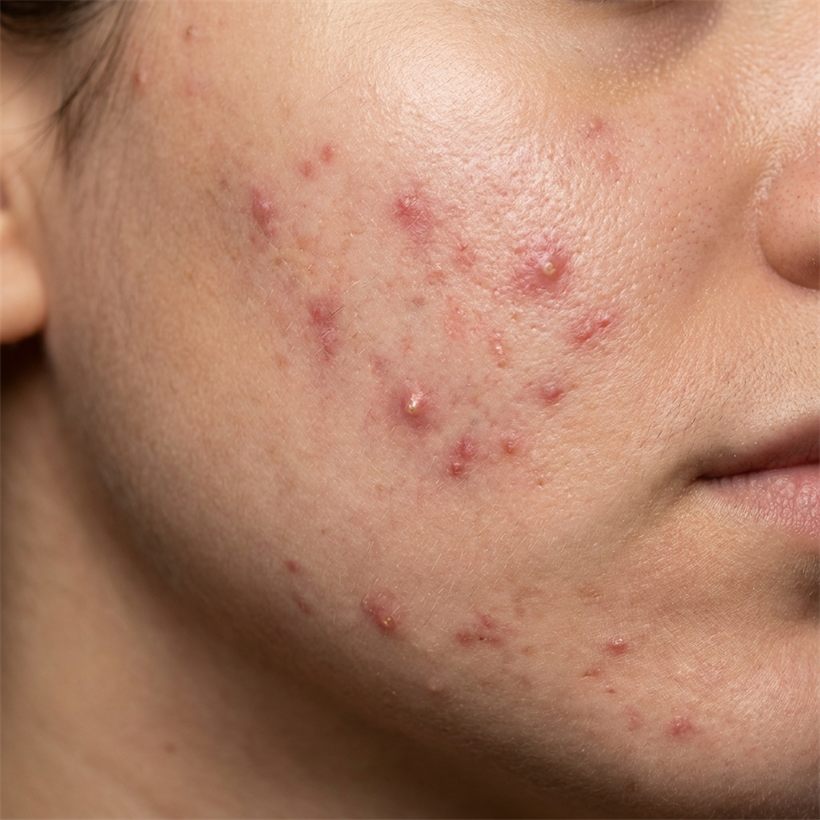
The first thing to establish is whether you have scars at all. Half the people who come to me for "scar treatment" have flat dark marks, which will fade with a cream. The other half have true structural scars — and for those, the specific shape decides the treatment.
This is the most important distinction in this article, so let me make it plainly.
Marks versus scars
A mark is flat. Run a finger over it and the surface is smooth — only the colour differs, brown or red. This is pigment, it is temporary, and creams work. See pimple marks.
A scar has depth. The skin surface itself is depressed, tethered or raised. Collagen has been lost or laid down abnormally. No cream can fill it — this needs a procedure.
A good test: look at your face in strong side-lighting. Marks disappear; scars cast shadows.
The types of atrophic scar
| Type | Appearance | Responds best to |
|---|---|---|
| Rolling | Broad, shallow, wavy depressions with sloping edges; skin looks undulating | Subcision, then microneedling or RF microneedling |
| Boxcar | Round or oval depressions with sharp vertical walls, like a small crater | Fractional laser, RF microneedling, punch elevation for deep ones |
| Icepick | Narrow, deep, needle-like pits | TCA CROSS, punch excision. Microneedling barely touches these. |
| Hypertrophic / keloid | Raised, firm, often on jaw, chest or back | Intralesional steroid injections, silicone, sometimes 5-FU. Not resurfacing. |
Most people have a mixture. That is why a single treatment rarely addresses a whole face, and why any honest plan combines two or three modalities in sequence.
What each procedure actually does
Subcision
A needle or cannula is passed under the scar to cut the fibrous bands tethering it downwards. For rolling scars and tethered depressions this is often the single highest-impact step, and skipping it is why microneedling alone disappoints so many people. Expect bruising for a week. Usually two to four sessions, six weeks apart.
Microneedling and RF microneedling
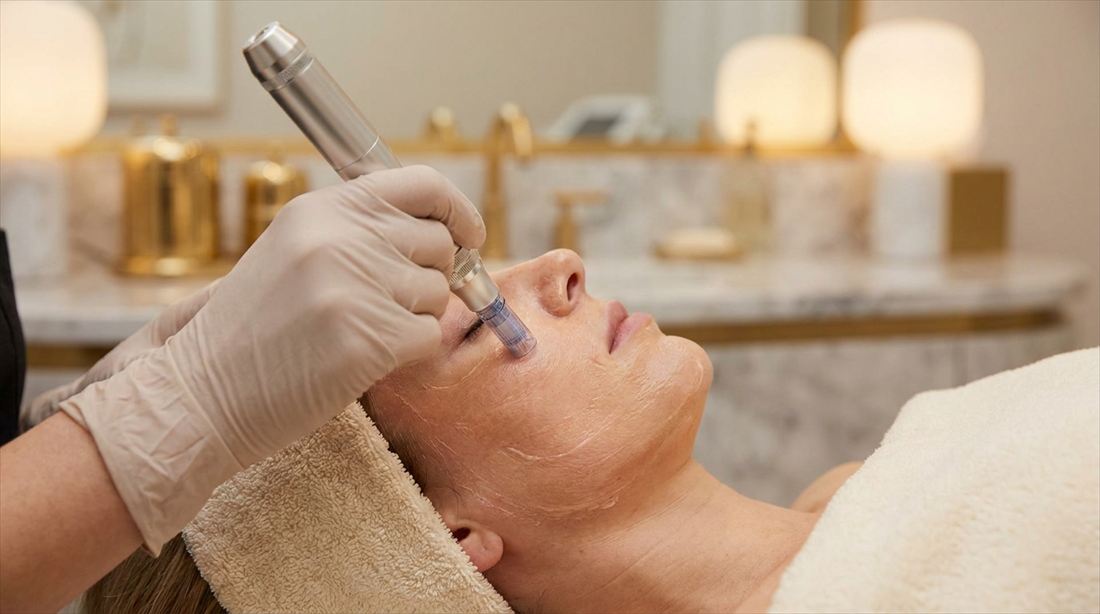
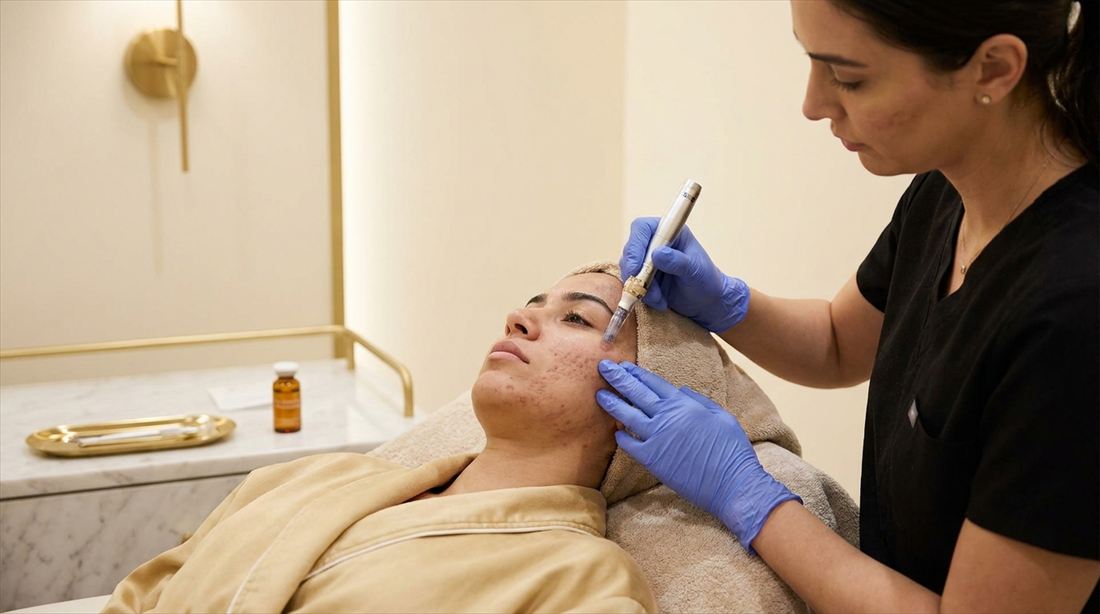
Controlled micro-injuries trigger new collagen. Plain microneedling suits shallow, rolling scars. Radiofrequency microneedling delivers heat at depth, which works better on boxcar scars and does more for skin tightening. Four to six sessions, monthly. Good safety profile in brown skin, which matters — this is a large part of why it is my usual backbone here.
TCA CROSS
High-concentration trichloroacetic acid applied precisely into the base of icepick scars with a fine applicator. It stimulates collagen from the bottom of the pit upwards. It is the only thing that reliably improves narrow deep pits. Expect dark crusts for a week and temporary darkening for a few weeks after — which alarms people who have not been warned.
Fractional lasers
Non-ablative fractional lasers (such as 1540/1550 nm) are the safer choice for Indian skin. Ablative CO2 resurfacing gives more dramatic results but carries a real risk of post-inflammatory hyperpigmentation in skin types IV to VI — which is most of Kerala. It can be done well, but it needs experience, conservative settings and strict sun protection afterwards. Anyone offering aggressive CO2 on brown skin without discussing pigmentation risk is not being straight with you.
Fillers and punch techniques
Hyaluronic acid filler can lift individual depressed scars immediately, lasting nine to eighteen months. Useful for a specific event or for scars that resist everything else. Punch excision and punch elevation are small surgical steps for isolated deep boxcar or icepick scars.
Chemical peels
Peels help surface texture and pigmentation but do very little for true depth. They are a useful adjunct, not a scar treatment in themselves — a distinction some clinics blur when selling packages.
Realistic expectations
I want to be direct here, because unrealistic promises are common in this field.
- Improvement, not erasure. A good outcome is 50 to 80 percent improvement over a full course. Scars become hard to notice in normal light rather than vanishing.
- It takes time. Collagen remodelling continues for three to six months after your last session. The final result is not the result you see at session six.
- Multiple sessions are not upselling. Four to six is normal, sometimes more for severe scarring.
- Combination beats repetition. Subcision plus RF microneedling plus TCA CROSS for the icepicks will beat six sessions of any one of them.
- Active acne must be controlled first. Treating scars while new lesions keep forming is filling a bucket with a hole in it.
Non-negotiable after any scar procedure
Strict daily sunscreen for at least three months. In skin type IV to VI, post-procedure sun exposure is the main cause of post-inflammatory hyperpigmentation — which then takes longer to clear than the scars took to improve. This is the single most common way good procedural results get spoiled in Kerala. Reschedule around beach trips and outdoor weddings rather than risk it.
Cost and planning
Costs vary widely by city and technology, so I will not quote figures that will be wrong by the time you read this. What I will say: budget for a course, not a session. A clinic quoting a single-session price for scar treatment is either misleading you or planning to have that conversation later.
Ask three questions at any consultation: which scar types do I have, which specific procedures address each one, and how many sessions before we reassess. If those cannot be answered clearly, be cautious.
The prevention point
Every dermatologist will tell you the same thing, and it is worth repeating because scar patients invariably wish they had heard it sooner: treating active acne early and properly is dramatically easier than treating scars. If you currently have inflammatory acne that is leaving pits, that is the urgent problem — not the scars you already have. Read the acne guide and get it controlled.
Frequently asked questions
Marks are flat discolouration — the skin surface is smooth and they fade over months, with creams speeding it up. Scars have depth: the surface is depressed or raised because collagen has been lost or overgrown. Scars need procedures; no cream fills them. In side-lighting, marks disappear and scars cast shadows.
It depends on the shape. Rolling scars respond to subcision plus microneedling; boxcar scars to RF microneedling or fractional laser; narrow icepick scars to TCA CROSS or punch excision. Most people need a combination, because most faces have more than one type.
Typically four to six, spaced four to six weeks apart, with more for severe scarring. Collagen keeps remodelling for three to six months after the final session, so the true result is later than the last appointment.
No, and any clinic promising complete removal is overselling. A realistic good outcome is 50 to 80 percent improvement — scars become difficult to see in normal lighting rather than disappearing entirely.
Non-ablative fractional lasers and RF microneedling have good safety records in brown skin. Aggressive ablative CO2 resurfacing carries a genuine risk of post-inflammatory hyperpigmentation in skin types IV to VI and needs conservative settings, experience and strict sun protection.
No. Active acne must be controlled first, otherwise new lesions create new scars while you are paying to treat old ones. Getting the acne under control is the first step of any scar plan.