Acne treatment: what actually works
Most people arriving at my clinic have already tried eight products. The problem is almost never effort — it is that nobody explained which of the four causes of acne they were actually treating.
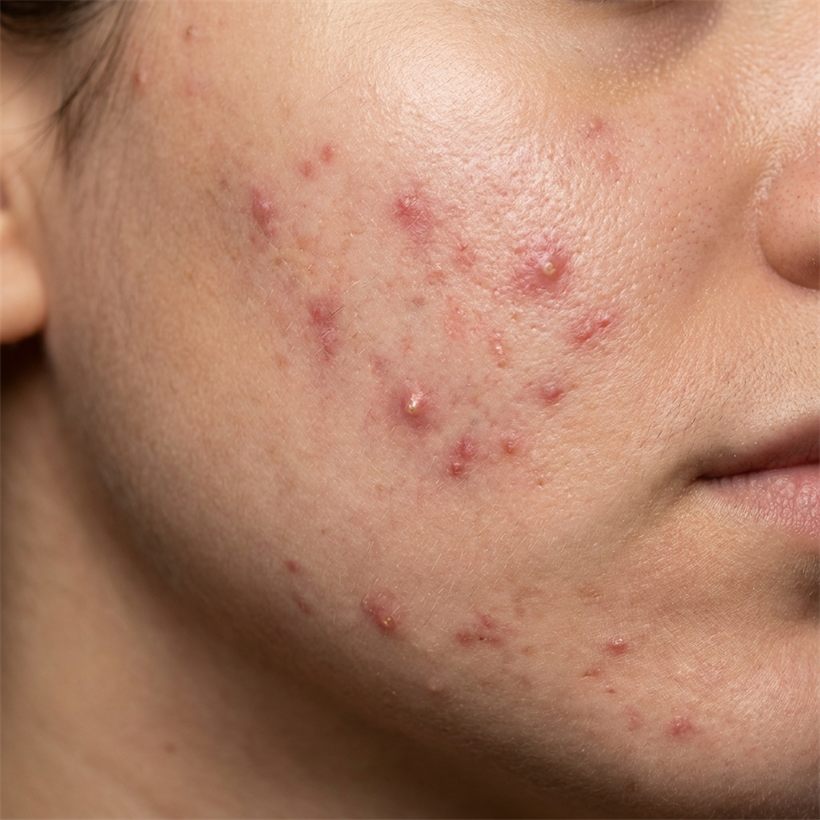
Let me start by removing the guilt, because it comes up in almost every consultation. Acne is not caused by being unclean. It is not caused by not washing enough. Patients who scrub their face four times a day usually have worse acne, not better, because they have destroyed the barrier while leaving the actual mechanism untouched.
The four things that create a pimple
Every spot on your face is the end result of four processes happening inside a single hair follicle:
- Excess sebum. Driven by androgens — which is why acne starts at puberty and flares with PCOS.
- Sticky dead cells. The follicle lining sheds cells that clump instead of clearing, forming a plug.
- Bacteria. Cutibacterium acnes lives in everyone's follicles. In a blocked, oil-rich follicle it multiplies.
- Inflammation. The immune response — this is what turns an invisible plug into a red, painful lump.
This matters practically: a treatment that only kills bacteria will fail if your main problem is plugging. That is why single-product approaches so often disappoint, and why the standard of care is a combination.
Know which type you have
| What you see | What it is | First-line treatment |
|---|---|---|
| Blackheads, whiteheads, rough bumpy texture | Comedonal acne | Topical retinoid (adapalene) |
| Red papules and pustules | Inflammatory acne | Retinoid + benzoyl peroxide, or a topical antibiotic combination |
| Deep, painful lumps; leaves marks or pits | Nodulocystic acne | Needs a dermatologist. Oral medication, often isotretinoin. |
| Jawline, chin, worse before periods | Hormonal pattern | See hormonal acne — may need hormonal treatment |
| Itchy, uniform small bumps, chest and back, humid weather | Likely fungal folliculitis, not acne | Antifungal. Acne treatment will not work. |
That last row matters enormously in Kannur. In our humidity I regularly see patients who have spent months on acne creams for what is actually Malassezia folliculitis. The tell is uniformity — real acne is mixed, with different lesions at different stages. Fungal folliculitis looks like the same small itchy bump repeated, often across the chest and upper back.
What actually works, in order of evidence
Topical retinoids — the backbone
Adapalene (available without prescription in India as a 0.1% gel) is where most treatment should start. It normalises how the follicle sheds cells, so it treats existing plugs and prevents new ones. Nothing else does both.
Apply a pea-sized amount to the whole face — not spot-by-spot — at night, starting twice a week and building to nightly. Moisturiser on top. Expect it to look slightly worse at weeks two to four before it improves; this "purging" is plugs surfacing, and abandoning treatment here is the single most common reason people conclude "retinoids don't work for me".
Benzoyl peroxide
Kills C. acnes without resistance developing, which is why it is paired with antibiotics. Start at 2.5% — higher strengths irritate more without working better. It bleaches fabric permanently, so use white pillowcases and towels.
Salicylic acid
Oil-soluble, so it gets into the pore. Useful as a 2% face wash or leave-on for blackheads and oily skin. Milder than a retinoid but easier to tolerate.
Azelaic acid
Underrated, and particularly valuable for Indian skin because it treats acne and the dark marks acne leaves behind, simultaneously. Safe in pregnancy — which makes it my usual first choice for pregnant patients.
Oral medication — when topicals are not enough
- Oral antibiotics (doxycycline, minocycline) — for moderate inflammatory acne, for a defined 3 month course, always alongside a topical retinoid. Not long-term.
- Combined oral contraceptives / anti-androgens — for hormonal patterns in women. Needs assessment.
- Isotretinoin — the only treatment that can produce lasting remission in severe acne. Highly effective and genuinely life-changing for scarring acne. Requires monthly monitoring, strict contraception in women because it causes severe birth defects, and honest discussion of side effects. It is not a casual prescription — but it is also badly under-used here because of fear, while patients scar permanently waiting.
Please stop doing these
- Steroid creams on pimples. Betamethasone, clobetasol and their combination creams are sold over the counter here and briefly reduce redness — then cause a dependent, burning, pustular face that takes months to reverse.
- Squeezing. It pushes inflammation deeper. Deep inflammation is what causes pits, and pits are permanent.
- Toothpaste, lemon, raw turmeric. These irritate, and in our skin type irritation means a dark mark.
- Antibiotic creams alone, long term. Resistance develops. Always pair with benzoyl peroxide or a retinoid.
How long it takes
| Timeframe | What to expect |
|---|---|
| Weeks 1–2 | Little visible change. Possible mild dryness or peeling. |
| Weeks 2–4 | May look slightly worse — purging. Keep going. |
| Weeks 6–8 | Fewer new spots. This is the first honest checkpoint. |
| Weeks 12 | Clear improvement expected. If none, the plan needs changing. |
| 3–6 months | Marks begin fading. Marks always outlast the acne itself. |
Twelve weeks is the fair trial period for any acne treatment. Switching products every three weeks is the most common self-sabotage I see — it guarantees you never give anything long enough to work.
When to see a dermatologist rather than continue alone
- You have deep, painful lumps rather than surface spots.
- Your acne is leaving pits or depressions — scarring is permanent, and this is urgent, not cosmetic.
- Twelve weeks of consistent over-the-counter treatment has not helped.
- Acne with irregular periods, excess facial hair or weight gain — that needs a PCOS workup.
- Sudden severe acne in an adult, or acne with a new medication or supplement.
- It is affecting your mood, confidence or willingness to go out. That is a legitimate medical reason on its own.
The thing I most want people to hear: if your acne is scarring, time matters. Treating active acne aggressively now is far easier, cheaper and more effective than treating the pits it leaves behind later. Scar revision exists — and it works — but prevention is in a different league entirely.
Frequently asked questions
Six to eight weeks for a fair first assessment, twelve weeks for a full verdict. Skin may look slightly worse at weeks two to four on a retinoid — that is purging, not failure. Dark marks take three to six months more, well after the acne itself has settled.
No. Acne is caused by sebum, follicle plugging, bacteria and inflammation inside the follicle — not by surface dirt. Over-washing damages the barrier and usually makes acne worse.
No. Over-the-counter steroid and steroid-combination creams reduce redness for a few days and then cause steroid-induced acne, visible capillaries and a dependent burning face. This is one of the most common preventable problems I treat.
It requires proper supervision, monthly monitoring and strict contraception in women because it causes severe birth defects. Within those conditions it is the most effective acne treatment available and often the only one that prevents permanent scarring. Undue fear of it causes real harm too.
They irritate the skin, and on Indian skin irritation reliably leaves a dark mark that lasts far longer than the pimple would have. Use benzoyl peroxide or adapalene instead.
Deeper skin tones have more reactive melanocytes, so inflammation triggers post-inflammatory hyperpigmentation. Controlling the acne early is the best prevention. See our guide on pimple marks for treatment options.