Uneven skin tone, diagnosed properly
Almost everyone who comes to me for "uneven tone" has already tried treating it as one thing. The single most valuable step in pigmentation care is not a cream — it is working out which condition you actually have.

Uneven tone is a description, not a diagnosis. Treating it generically is why so many people cycle through products without progress. Here is the differential I work through in clinic.
The five common patterns
| Condition | Clues | Treatment direction |
|---|---|---|
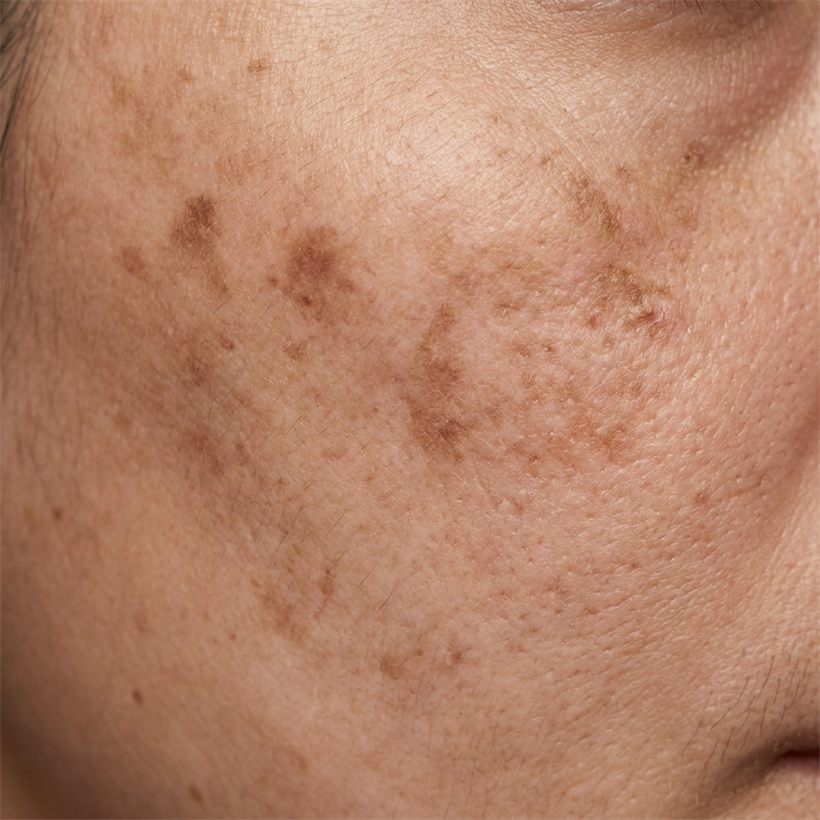
| Melasma | Symmetrical brown or grey patches on cheeks, forehead, upper lip. Worse in summer, pregnancy, on the pill. | Tinted sunscreen, azelaic acid, supervised hydroquinone. Avoid aggressive treatment. More |
| Post-inflammatory hyperpigmentation | Discrete spots exactly where pimples, bites or injuries were. Fades slowly. | Azelaic acid, niacinamide, retinoid, sunscreen. More |
| Tanning | Fairly even darkening on sun-exposed areas; a clear line where clothing covered skin. | Sun protection, exfoliation, peels. More |
| Periorbital pigmentation | Brown around the eyes, often familial, worse with rubbing or allergy. | Treat the allergy, stop rubbing, gentle brightening. More |
| Lichen planus pigmentosus | Slate-grey to brown patches on face and neck, sometimes with mild itch. Often mistaken for melasma and made worse by peels. | Needs medical diagnosis; treated as an inflammatory condition, not just pigment. |
Others worth knowing about
- Ochronosis — blue-grey discolouration from long-term unsupervised hydroquinone. Stopping is essential; it is stubborn to treat.
- Steroid-induced changes — thinning, visible capillaries and rebound pigmentation from fairness creams. See brightening versus fairness.
- Riehl's melanosis — pigmentation from a contact reaction to a cosmetic or fragrance. Identifying and stopping the culprit is the treatment.
- Vitiligo — lighter patches losing pigment entirely, with sharply defined borders. Completely different condition; needs a dermatologist promptly, as early treatment works better.
- Pityriasis versicolor — pale, faintly scaly patches on chest, back and neck. A fungal infection, very common in our humidity, and it needs antifungals rather than brightening creams.
What every type has in common
Whatever the diagnosis, three things apply: daily broad-spectrum sunscreen, avoiding irritation of any kind, and patience measured in months. Those three are safe for every pattern above and undermine none of them — which makes them the sensible place to start while you get a diagnosis.
Why the diagnosis changes the plan so much
A concrete example. Aggressive glycolic peels genuinely help post-inflammatory hyperpigmentation and tanning. The same peels frequently make melasma and lichen planus pigmentosus worse, because both are inflammation-sensitive. So the identical treatment, applied to two conditions that look similar in the mirror, produces opposite outcomes.
This is the whole argument for getting looked at rather than self-treating. A dermatologist can use a Wood's lamp or dermoscope to judge whether pigment sits in the epidermis or dermis — epidermal pigment responds well to topicals, dermal pigment much less so — and that distinction alone determines whether a cream is likely to work at all.
If you have been treating "uneven tone" for more than three months without progress, the most useful thing you can do is stop buying and get a diagnosis.
Frequently asked questions
The pattern tells you a lot: symmetrical cheek patches suggest melasma, discrete spots where pimples were suggest post-inflammatory hyperpigmentation, even darkening on exposed areas with a clothing line suggests tanning. Slate-grey patches or lighter patches losing pigment need medical assessment.
Most commonly because the diagnosis is wrong. Treatments that help acne marks and tanning can worsen melasma and lichen planus pigmentosus, because those are inflammation-sensitive. Dermal pigment also responds far less to creams than epidermal pigment does.
Yes. A Wood's lamp or dermoscope helps judge whether pigment sits in the epidermis or the dermis. Epidermal pigment responds well to topical treatment; dermal pigment responds much less, which changes what is realistic.
They are, but a different one. Sharply defined lighter patches losing pigment entirely may be vitiligo, which needs prompt dermatological assessment because early treatment works better. Pale, faintly scaly patches on the chest and back are more likely a fungal infection needing antifungals.
Daily broad-spectrum sunscreen, a gentle routine avoiding all irritation, and no scrubs, lemon, bleaching or unlabelled creams. These help every type of pigmentation and undermine none of them.
Yes, in inflammation-sensitive conditions. Aggressive peels help acne marks and tanning but frequently worsen melasma and lichen planus pigmentosus, which is exactly why the diagnosis has to come first.