Brightening is not fairness
This is the article I would most like every patient in Kerala to read before buying a cream. Not for moral reasons — for medical ones. I spend a substantial share of my week undoing the damage these products cause.
Let me define the two things clearly, because the marketing deliberately blurs them.
The actual difference
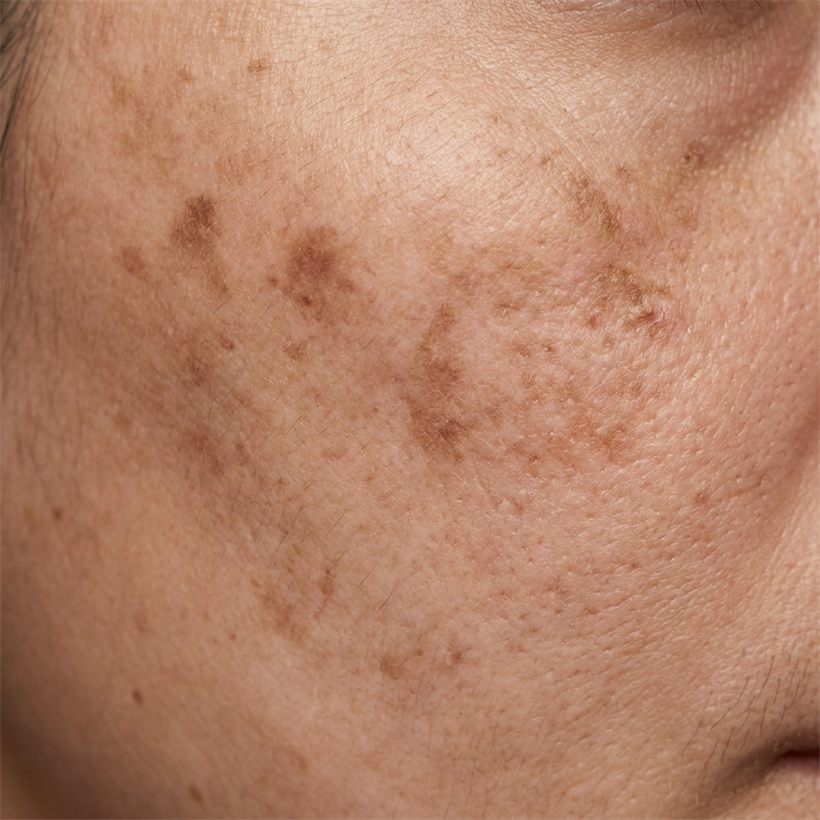
Brightening treats a defined pigmentary problem — melasma, dark marks after acne, tanning, uneven patches — and returns your skin to its own even baseline tone. This is legitimate dermatology with real evidence.
Fairness claims to change your constitutional skin colour, which is genetically determined by the type and amount of melanin your melanocytes produce. No safe topical product does this. Anything that appears to is either temporarily suppressing melanocytes with something you should not be putting on your face, or it is not working at all.
What is actually in unregulated fairness creams
I want to be specific, because vague warnings do not change behaviour. Analyses of unregulated and imported "fairness" and "night" creams sold in India have repeatedly found:
- Potent topical steroids — clobetasol, betamethasone, mometasone — frequently undeclared. These are the single biggest problem.
- Mercury compounds, which inhibit melanin production and are neurotoxic and nephrotoxic. Mercury accumulates and can affect kidneys and the nervous system, and it is transferred in pregnancy and breastfeeding.
- Hydroquinone at unsafe concentrations, beyond what is permitted without prescription.
- Undeclared retinoids, which are unsafe in pregnancy.
What steroids actually do to a face
This deserves detail, because the early effect is genuinely convincing and that is exactly the trap. A potent steroid reduces redness and lightens skin within one to two weeks. It looks like it is working brilliantly. Then, over months:
- Skin thinning (atrophy) — the skin becomes fragile, shiny and translucent
- Telangiectasia — permanently visible red capillaries, especially on the cheeks
- Steroid-induced rosacea and acne — persistent papules and pustules
- Hypertrichosis — increased fine facial hair
- Rebound pigmentation darker than the original problem
- Dependence — stopping causes intense burning, redness and flaking, so people restart. This is topical steroid withdrawal, and it is genuinely distressing.
Treating topical steroid damaged face takes months. Some changes — visible capillaries, atrophy — may be permanent or need laser treatment. This is why I am blunt about it: the two weeks of lightening costs far more than it delivers.
How to spot a cream you should not use
- It lightens your skin dramatically within one to two weeks. Genuine treatments take 8 to 12 weeks.
- No complete ingredient list, or one in a language you cannot read.
- No manufacturer name, licence number or expiry date.
- Sold loose, repackaged, or brought from abroad by a relative without a box.
- Recommended by a pharmacy counter, salon or neighbour rather than a doctor.
- Marketed as "instant", "magic", "7 days", or with before-and-after photos of a different person.
- Your face burns, flushes or flakes badly when you stop it. This is a red flag, not a withdrawal you should push through alone.
What legitimate brightening looks like
A real plan starts with a diagnosis, because the treatment differs entirely: melasma, post-inflammatory hyperpigmentation, tanning, lichen planus pigmentosus and periorbital pigmentation all look similar to a patient and need different approaches.
Then: daily broad-spectrum sunscreen as the foundation; a targeted active such as azelaic acid, niacinamide, vitamin C, tranexamic acid, alpha arbutin or a supervised course of hydroquinone; a retinoid where appropriate; and procedures such as superficial peels or low-fluence laser toning as adjuncts. Timeline 8 to 12 weeks for visible change, with maintenance afterwards.
Note what this does not include: bleaching, mercury, indefinite steroid use, or glutathione injections. On that last one — intravenous glutathione for skin lightening is sold widely and has no good evidence for efficacy, is not approved for this purpose, and carries risks including serious reactions and, with unregulated preparations, infection. I do not offer it, and I would advise against it.
A word beyond the medicine
I treat pigmentation every day and I have no interest in lecturing anyone about their preferences. But it is worth saying plainly: an entire industry has profited by convincing people in Kerala that their natural complexion is a defect requiring correction. It is not. Melanin is protective — it reduces sun damage and photoageing, which is why deeply pigmented skin typically shows fewer wrinkles at the same age.
If you have a genuine pigmentation problem — patches, marks, melasma, a tan you want reversed — that is a medical issue and I will treat it properly. If what you actually want is to be several shades lighter than you were born, no honest doctor can give you that safely, and anyone who says otherwise is selling you a steroid.
Frequently asked questions
Brightening treats a defined pigmentary problem such as melasma, acne marks or tanning and returns skin to its own even baseline tone. Fairness claims to change your constitutional colour, which is genetically determined — no safe topical product does that.
Unregulated ones frequently are. Analyses have repeatedly found undeclared potent steroids, mercury compounds and unsafe hydroquinone concentrations. Steroids cause skin thinning, permanently visible capillaries, steroid-induced acne and a dependent, burning face when stopped.
Warning signs: dramatic lightening within one to two weeks, no complete ingredient list, no manufacturer or licence details, sold loose or brought from abroad without a box, and severe burning or flushing when you stop using it. Genuine treatments take 8 to 12 weeks.
Partly. It takes months of careful treatment, and some changes such as visible capillaries and skin thinning may be permanent or require laser treatment. The earlier it is stopped under medical supervision, the better the outcome.
Intravenous glutathione for skin lightening has no good evidence of efficacy, is not approved for this purpose, and carries risks including serious reactions and infection from unregulated preparations. I would advise against it.
No. Your baseline colour is genetically determined, and no safe topical or injectable changes it. What can be treated safely and effectively is uneven pigmentation — patches, marks, melasma and tanning — which returns your skin to its own even tone.