Sun tan: how to actually reverse it
Tanning is the most common pigmentation complaint in Kerala and the one with the most useless products aimed at it. Understanding what a tan physically is tells you immediately why scrubbing cannot remove one.
When UV hits your skin, melanocytes produce melanin and distribute it to surrounding cells, where it sits above the nucleus like a parasol to shield DNA. A tan is therefore not a stain on the surface — it is pigment inside living cells, and it is a sign of DNA damage having occurred.
This single fact settles most of the confusion. You cannot scrub off something that is inside cells. The tan leaves when those cells naturally migrate upward and shed, which takes roughly four to six weeks — longer as you age.
What genuinely speeds it up
| Approach | How it helps |
|---|---|
| Stop the exposure | Non-negotiable. Continuing to tan while treating a tan is pointless. Daily SPF 30+, reapplied, plus hat and umbrella. |
| Chemical exfoliation | Glycolic or lactic acid speeds shedding of pigmented cells. Two to three times weekly. |
| Niacinamide | Reduces pigment transfer from melanocytes to skin cells |
| Vitamin C | Antioxidant plus mild tyrosinase inhibition |
| Azelaic acid, alpha arbutin, kojic acid | Pigment inhibitors, useful for stubborn tanning |
| Retinoids | Accelerate turnover and disperse pigment. Nights only. |
| Professional peels | Fastest option for deep tanning. Series of four to six. |
| Laser toning | For resistant cases, conservatively. See laser toning. |
The parts that stay tanned longest
Hands, forearms, the back of the neck, the V of the chest and the feet. These take longer than the face because turnover is slower and because almost nobody applies sunscreen there. If your face and hands no longer match, that is why — and the fix is extending your sunscreen habit past the jawline.
Home remedies that make it worse
- Lemon juice. pH 2 and phototoxic. On our skin under our sun it reliably causes irritation followed by darker pigmentation. The most counterproductive remedy in circulation.
- Aggressive scrubbing, ubtan, pumice. Cannot reach intracellular pigment; only causes friction pigmentation.
- Bleach creams. Chemical irritation, then rebound darkening.
- Baking soda. Alkaline, destroys the barrier.
- Salon "de-tan" packs with unlabelled contents. Frequently contain bleaching agents or steroids.
Mild, genuinely harmless options: yoghurt (lactic acid), aloe vera for soothing. Modest effect, but they will not set you back.
Realistic timeline
Four to six weeks for a mild tan to fade on its own with strict sun protection. Two to three months with active treatment for a deeper tan. Longer for hands and feet. Tanning that has been building over years may have contributed to permanent photoageing — deeper pigmentation and textural change — which needs procedural treatment rather than creams.
An important distinction
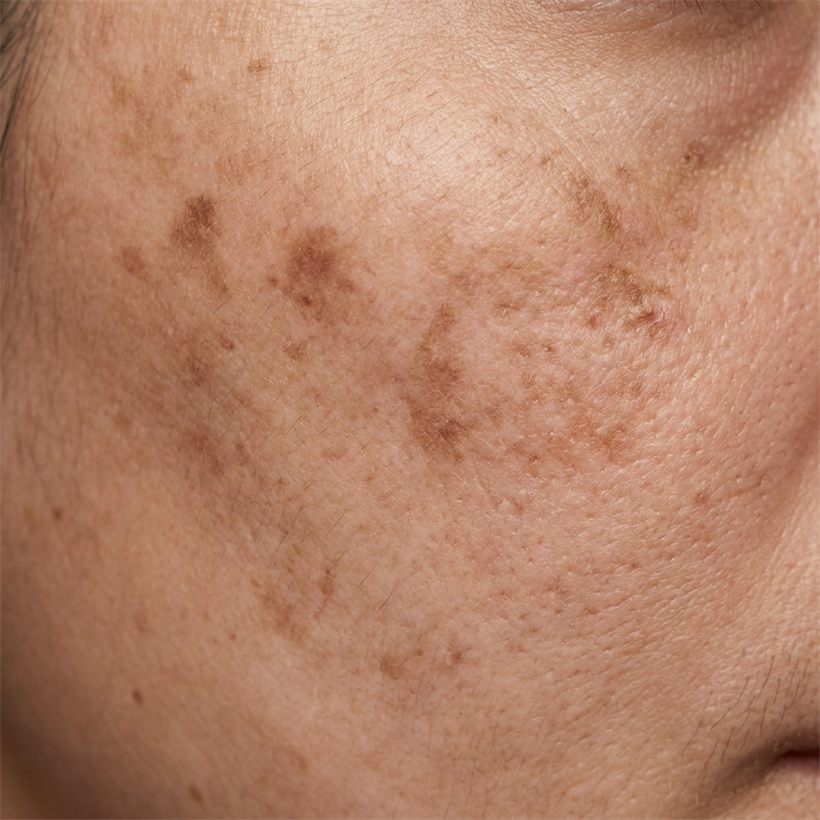
If your "tan" is patchy rather than even, symmetrical across the cheeks, or has stayed put for more than three months despite good sun protection, it is probably not a tan. Melasma, post-inflammatory hyperpigmentation and lichen planus pigmentosus all get mislabelled as tanning, and de-tan treatments do not help them — aggressive ones make melasma worse. That is worth a proper diagnosis before you spend on packages.
Frequently asked questions
Four to six weeks for a mild tan with strict sun protection, and two to three months with active treatment for deeper tanning. Hands and feet take longer because cell turnover there is slower.
No. A tan is melanin inside living skin cells, not dirt on the surface, so scrubbing cannot reach it. It only causes friction and irritation, which in brown skin produces more pigmentation.
No, and it commonly makes things worse. Lemon juice is pH 2 and phototoxic, so on Indian skin under strong sun it causes irritation followed by darker pigmentation. Use a formulated vitamin C serum or azelaic acid instead.
Because cell turnover is slower there and almost nobody applies sunscreen past the jawline. Extending sunscreen to the neck, chest, hands and forearms is what closes the gap.
A series of four to six professional chemical peels alongside daily sunscreen and a home routine with niacinamide, vitamin C or azelaic acid. Laser toning is an option for resistant cases, used conservatively.
Tanning is fairly even on sun-exposed areas and fades with sun protection. If the pigmentation is patchy, symmetrical across both cheeks, or persists beyond three months despite good protection, it is more likely melasma, which needs different treatment.