Does diet cause acne?
Almost every patient asks me what to stop eating. The honest answer is narrower than the internet suggests, and much narrower than the restriction diets being sold.
For decades dermatologists insisted diet was irrelevant to acne. That was an overcorrection, and the evidence has since moved. But it has moved less far than social media suggests. Here is where things actually stand.
What has reasonable evidence
1. High-glycaemic-index foods
This is the strongest dietary link. Foods that spike blood sugar raise insulin and IGF-1, which increase sebum production and androgen activity. Several controlled trials have shown improvement in acne on a low-glycaemic-load diet.
Practically, in Kerala, the main culprits are refined carbohydrates: large portions of white rice, white bread, sugary tea and coffee several times a day, bakery items, biscuits, sweets and soft drinks.
The realistic version of this advice
I do not tell patients to stop eating rice. That advice gets ignored, and rightly so. What works: reduce the portion of rice, add protein and vegetables to the same meal so the glycaemic load of the whole plate drops, cut sugar in tea and coffee, and treat bakery items and soft drinks as occasional rather than daily. Whole-grain and parboiled options where practical. That is achievable, and it is enough to matter.
2. Dairy — particularly skimmed milk
Observational studies fairly consistently associate milk intake with acne, and the association is stronger for skimmed milk than full-fat, which points to the hormones and whey proteins rather than the fat. Interestingly, yoghurt and cheese show a weaker association, possibly because fermentation changes things.
This is worth a genuine two-month trial if you drink a lot of milk. Reduce or switch to a plant alternative, keep everything else the same, and photograph your skin fortnightly. If nothing changes, resume — there is no reason to restrict a nutritious food for no benefit.
3. Whey protein supplements
This one has a clear and often dramatic effect in the patients I see, mostly young men who started at the gym. Whey raises IGF-1 substantially and commonly triggers acne on the face, chest, shoulders and back within weeks. If your acne started when your supplement did, that is your answer. Switch to a plant-based protein or get protein from food.
What does not have good evidence
- Oily and fried food. The most persistent belief in India, and it does not hold up — dietary fat does not become sebum. Fried food is worth reducing for other health reasons, but eating a vada does not cause a pimple. (Oil on the skin from cooking fumes is a separate, minor matter.)
- Chocolate. Weak and inconsistent evidence. Where an effect appears it is likely the sugar and milk, not the cocoa.
- "Heat-producing" foods — mango, jackfruit, nuts, non-vegetarian food. No evidence at all. This is cultural belief, not physiology, and it causes needless anxiety during mango season every year.
- Spicy food. No effect on acne. It can flush rosacea-prone skin, which is a different condition.
- Iodine and salt. Only relevant at extreme intakes.
Supplements: the honest position
Zinc has modest evidence for inflammatory acne, though it can cause nausea and interferes with copper absorption at high doses. Omega-3 fatty acids may help through general anti-inflammatory action; the evidence is preliminary. Probiotics are an area of active research but not yet a treatment. Vitamin B12 supplementation can occasionally trigger acne — worth knowing if yours started with an injection or high-dose supplement.
The important caveat
Diet is a modifier, not a cause
Nobody gets acne purely from what they eat, and nobody clears severe acne purely by changing their diet. Acne is driven by sebum, follicular plugging, bacteria and inflammation, and it has a strong genetic component. Diet adjusts the volume; it does not control the switch.
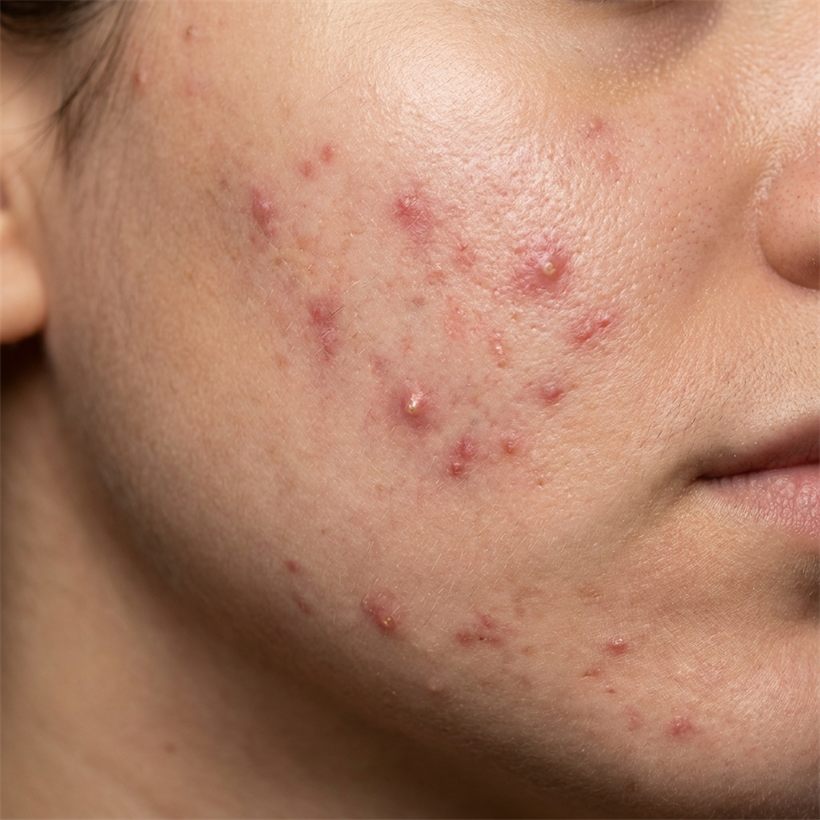
I raise this because I regularly meet patients who have spent a year on increasingly restrictive diets, developing a difficult relationship with food and real nutritional gaps, while their acne quietly scarred. If you have inflammatory acne that is leaving marks or pits, medical treatment is the priority and dietary change is an adjunct — not the other way round.
So: reduce high-glycaemic foods, trial cutting dairy if you drink a lot of milk, stop whey protein if that is when it started. Then get the acne itself treated properly. That order gets results; the reverse rarely does.
Frequently asked questions
No, despite being the most persistent belief in India. Dietary fat does not become skin sebum. Reducing fried food is sensible for general health, but it is not an acne treatment.
Observational studies fairly consistently link milk intake with acne, with a stronger association for skimmed milk than full-fat, which points to hormones and whey proteins rather than fat. A two-month trial of reducing it is reasonable if you drink a lot.
Yes, and it is one of the clearest dietary triggers I see. Whey raises IGF-1 substantially and commonly causes acne on the face, chest, shoulders and back within weeks. If your acne started when the supplement did, switching to a plant protein usually helps.
There is no evidence for this. It is a cultural belief rather than physiology, and it causes unnecessary anxiety every mango season. High-glycaemic foods and dairy are the dietary factors with actual evidence.
Complete elimination is neither necessary nor sustainable. Reducing portion sizes of rice, adding protein and vegetables to lower the glycaemic load of the whole meal, and cutting sugar in tea and bakery items achieves the benefit realistically.
No. Diet is a modifier, not a cause — it adjusts the volume rather than controlling the switch. Severe or scarring acne needs medical treatment as the priority, with dietary change as an adjunct.