Female pattern hair loss
Female pattern hair loss is common, distressing, and consistently under-treated, partly because women are often reassured it is normal until a great deal of density has already gone.

Female pattern hair loss follows a different pattern from the male version. Women typically keep their frontal hairline while thinning diffusely over the crown, so the parting widens and the scalp becomes visible through the hair. Complete baldness is unusual.
How to recognise it early
- A widening parting — the clearest early sign. Compare against a photograph from a year or two ago.
- A thinner ponytail. Many women notice this before anything else, and it is a genuinely useful marker.
- More visible scalp under direct light or in photographs.
- Finer, shorter hairs mixed among normal ones — miniaturisation, the hallmark of pattern loss.
- Frontal hairline preserved, unlike male pattern loss.
It typically begins in the twenties to forties and often accelerates around menopause as oestrogen falls. There is usually a family history on either side.
What to have tested
Investigations that change management
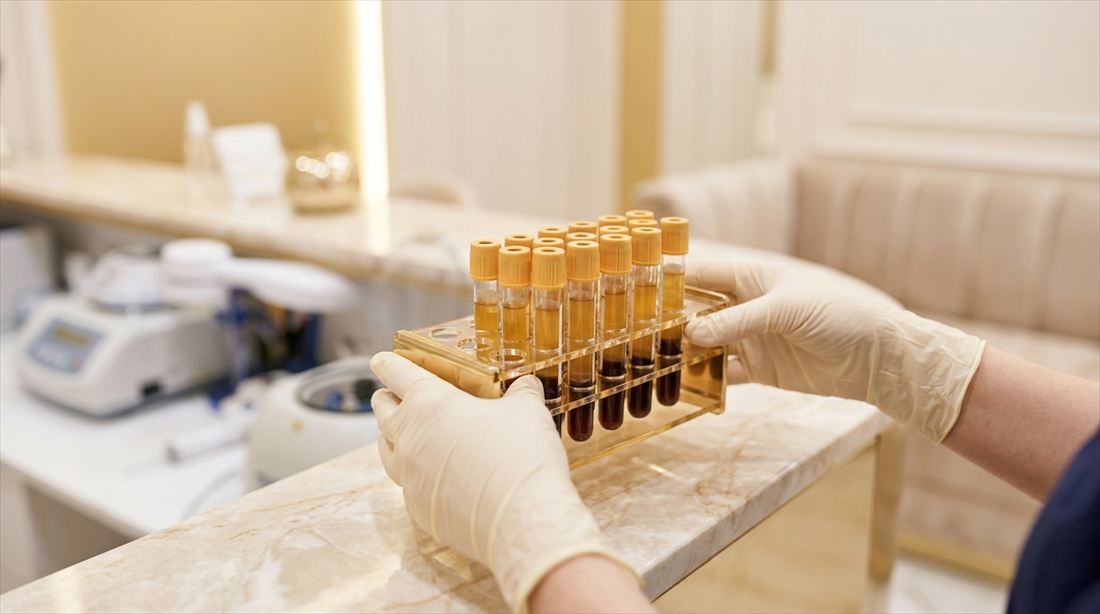
Ferritin (not just haemoglobin), thyroid function with free T4, vitamin D and B12. Where there are also irregular periods, acne, or excess facial or body hair, add testosterone, DHEAS, LH/FSH and prolactin, plus a pelvic ultrasound — PCOS is a common and treatable contributor.
Two things worth knowing. First, iron deficiency can coexist with pattern loss and worsen it, so correcting ferritin often helps even when the pattern diagnosis stands. Second, a normal haemoglobin does not exclude low ferritin — ask for ferritin specifically.
Treatment
Minoxidil — first line
Topical minoxidil 2% or 5% applied to the scalp is the best-evidenced treatment. Three things to know before starting, because not knowing them is why women stop:
- It takes four to six months to judge.
- There is often a temporary increase in shedding at four to six weeks as resting follicles restart. This is expected.
- It works only while used. Stopping means losing the gains over the following months, so this is a long-term commitment worth deciding on deliberately.
Apply to the scalp, not the hair. If the alcohol base irritates, a foam formulation is usually better tolerated.
Other options, all prescription
- Spironolactone — an anti-androgen, effective in many women, particularly with PCOS. Requires reliable contraception; unsafe in pregnancy.
- Low-dose oral minoxidil — increasingly used under supervision, useful where the topical is poorly tolerated. Needs blood pressure monitoring.
- Finasteride or dutasteride — used off-label in some women, generally post-menopausal, and absolutely contraindicated in pregnancy or where pregnancy is possible.
- Combined oral contraceptives with an anti-androgenic progestogen.
- Correcting deficiencies — iron, thyroid, vitamin D. Necessary and sometimes sufficient for a good part of the improvement.
Procedures
PRP has moderate evidence as an adjunct. Microneedling combined with minoxidil has reasonable supporting data. Low-level laser therapy devices have modest evidence. Hair transplant is possible for women but candidate selection is more demanding than in men, because donor density is often also affected.
What helps day to day
- Avoid tight hairstyles. Tight braids, buns and ponytails cause traction alopecia, which is a separate and preventable loss that often compounds pattern thinning. Early traction loss is reversible; late traction loss is scarring and permanent.
- Treat the scalp. Untreated dandruff and seborrhoeic dermatitis increase shedding.
- Be gentle mechanically. Reduce heat styling and chemical relaxing. Note that these damage the hair shaft rather than causing pattern loss — they cause breakage, which looks like thinning.
- Skip the miracle oils. Oil does not reach the follicle and cannot influence pattern loss.
- Consider camouflage. Hair fibres, coloured scalp powders and volumising products are legitimate and immediate. There is no reason to endure distress while waiting six months for treatment to work.
The point about timing
Pattern hair loss is progressive. Treatment maintains and partially restores what is there but cannot regrow follicles that have already been lost. This means early treatment substantially outperforms late treatment — a fact that gets lost when women are told to wait and see.
If your parting is widening or your ponytail is thinner than it was a year ago, that is the point to get assessed. Not when the scalp shows in every photograph.
Frequently asked questions
Women usually keep the frontal hairline while thinning diffusely over the crown, so the parting widens and the scalp becomes visible through the hair. Complete baldness is unusual, unlike in men.
A widening parting and a noticeably thinner ponytail are the earliest reliable signs. Comparing a current photograph with one from a year or two ago is the most practical way to confirm it.
Yes, topical minoxidil 2% or 5% is the best-evidenced treatment for women. Expect four to six months before judging, a temporary increase in shedding at four to six weeks, and loss of the gains if you stop — so it is a long-term commitment.
Ferritin (not just haemoglobin), thyroid function with free T4, vitamin D and B12. With irregular periods, acne or excess facial hair, add hormonal tests and a pelvic ultrasound to check for PCOS.
Yes. Tight braids, buns and ponytails cause traction alopecia. Early traction loss is reversible, but sustained tension eventually scars the follicle and the loss becomes permanent.
Considerably. Treatment maintains and partially restores existing follicles but cannot regrow those already lost, so starting when the parting first widens gives a much better outcome than waiting until the scalp shows clearly.