PRP for hair loss: an honest assessment
PRP is offered almost everywhere now, often with claims that outrun the evidence. It does genuinely work for the right patient. Here is where the line actually sits.
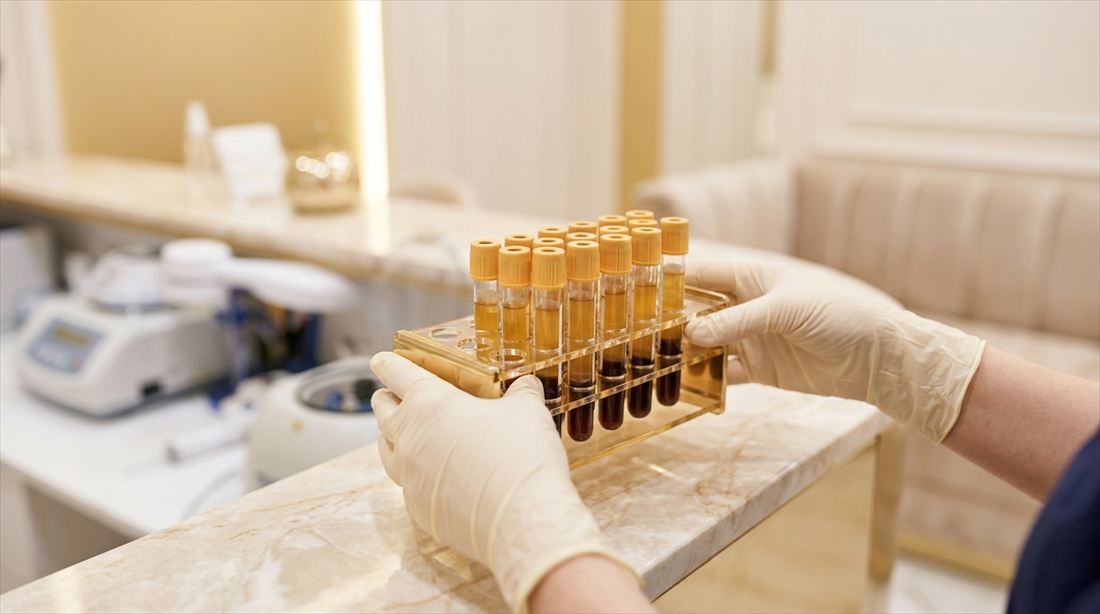
Platelet-rich plasma involves drawing your own blood, spinning it in a centrifuge to concentrate the platelets, and injecting that concentrate into the scalp. Platelets contain growth factors that appear to stimulate follicles, extend the growth phase and improve the blood supply around them.
Because it uses your own blood, there is no risk of allergy or rejection. That safety profile is a genuine advantage, and part of why it has spread so quickly.
Who it genuinely helps
| Situation | Likely benefit |
|---|---|
| Early to moderate pattern hair loss, with visible thinning but hair still present | Good. This is the ideal candidate. |
| Alongside minoxidil and finasteride | Good — the combination outperforms any single treatment. |
| Female pattern thinning at the crown | Reasonable, particularly where oral options are unsuitable. |
| Alopecia areata (patchy autoimmune loss) | Some evidence, but steroid injections are usually first line. |
| Before or after a hair transplant | May improve graft survival and healing. |
| Completely bald, shiny scalp with no visible follicles | None. PRP stimulates existing follicles; it cannot create new ones. |
| Scarring alopecia where follicles are destroyed | None for regrowth. Treatment is about stopping progression. |
That last distinction is the one most often glossed over. PRP is a stimulant, not a seed. If the follicle is gone, nothing injected will bring it back — and a clinic promising regrowth on a smooth bald scalp is not being honest with you.
What a course involves
- Sessions: typically four to six, spaced four weeks apart, then maintenance every four to six months.
- Duration: around 45 to 60 minutes per session, including blood draw and processing.
- Discomfort: the injections are uncomfortable. Topical anaesthetic or a nerve block reduces this considerably — ask, because not every clinic offers it as standard.
- Downtime: minimal. Scalp tenderness and mild swelling for a day or two. Avoid washing for 24 hours, and skip the gym that day.
- Results: reduced shedding first, often by two to three months. Visible density change takes four to six months. Photographs at each visit are essential, because gradual change is genuinely hard to perceive.
What the evidence actually says
I want to be measured here. Multiple small studies and several meta-analyses show benefit in hair count and thickness for pattern hair loss. But the studies vary considerably in preparation protocol, platelet concentration, injection technique and session spacing — which means results between clinics are genuinely not comparable.
Practically, this means the quality of your result depends on the protocol used, and it is reasonable to ask what centrifuge settings and preparation method a clinic uses. The evidence is moderate: strong enough to offer PRP as an adjunct, not strong enough to present it as a replacement for minoxidil or finasteride.
Questions worth asking before you pay for a package
- Have my blood tests been done first? Treating PRP without checking ferritin, thyroid and vitamin D means potentially paying to inject a correctable deficiency.
- What is my diagnosis? PRP is not appropriate for all types of hair loss.
- Will I also be on minoxidil or oral treatment? PRP alone underperforms combination therapy.
- Is anaesthetic offered?
- Will standardised photographs be taken at each visit?
- What is the maintenance plan and cost after the initial course?
Who should not have PRP
PRP is avoided in people with platelet disorders or low platelet counts, active blood cancers, ongoing anticoagulant therapy in some cases, active scalp infection, uncontrolled diabetes, and during pregnancy. Smoking reduces results. Do tell your dermatologist about all medications and supplements — including any blood thinners, aspirin, or high-dose fish oil.
My honest position
PRP is a legitimate, useful treatment with a good safety record, and I offer it. But it is an adjunct. The patients who get the best results are those who have had their deficiencies corrected, are on appropriate medical treatment, and add PRP on top — not those who choose PRP instead of investigating why their hair is falling.
If your budget is limited, spend it in this order: blood tests first, then medical treatment, then PRP. That sequence gets more hair per rupee than any other, and it is the opposite of how these packages are usually sold.
Frequently asked questions
It has moderate evidence for early to moderate pattern hair loss, improving hair count and thickness. It works best combined with minoxidil or oral treatment rather than alone, and it cannot regrow hair on a completely bald scalp where follicles are gone.
Typically four to six sessions four weeks apart, followed by maintenance every four to six months. Reduced shedding often comes first at two to three months, with visible density change at four to six.
The injections are uncomfortable. Topical anaesthetic or a nerve block reduces this considerably, so it is worth asking whether the clinic offers it, as not all do routinely.
No. PRP stimulates existing follicles but cannot create new ones. On a smooth bald scalp with no visible follicles it will not work, and a transplant is the appropriate option instead.
No — they work differently and best together. Minoxidil has stronger evidence as a foundation treatment. PRP is an adjunct that adds to it, and choosing PRP instead of medical treatment usually gives a worse result.
Yes, and this matters. Ferritin, thyroid function and vitamin D should be checked first, because correcting a deficiency is cheaper and more effective than injecting around it. PRP without a diagnosis is treating the wrong problem.