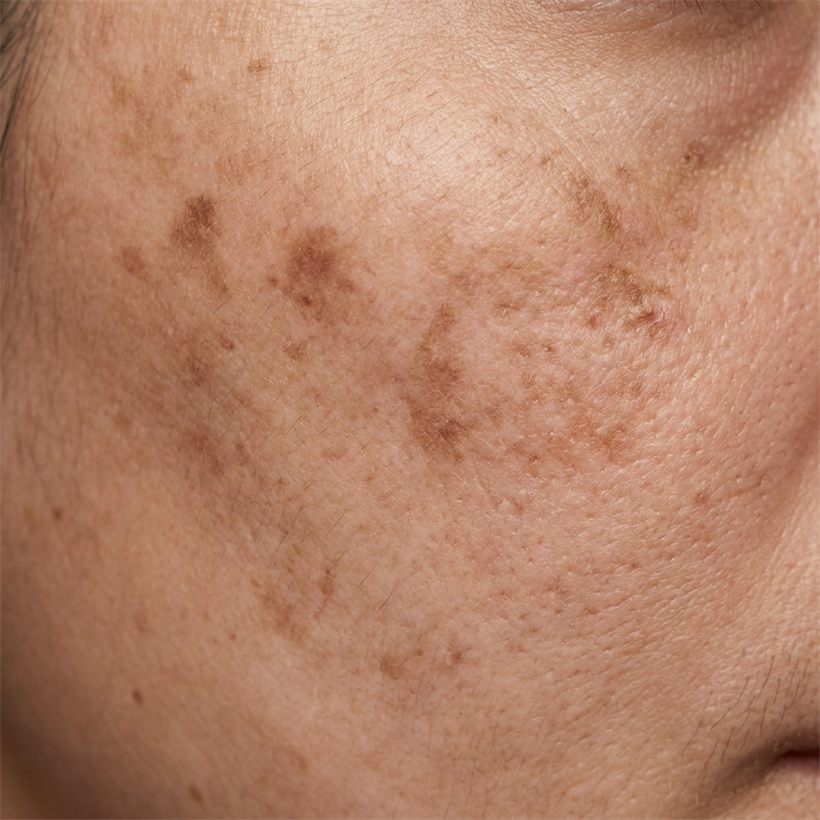
Dark neck and underarms
Patients apologise to me for this one, convinced it means they have not washed properly. It almost never does. In most cases a dark, velvety neck is your skin reporting something about your metabolism.
Let me address the embarrassment first, because it stops people seeking help. A dark neck is not a hygiene failure. Scrubbing it harder is the single most common self-treatment, and it reliably makes the pigmentation darker by adding friction-induced inflammation on top of the original problem.
Is it acanthosis nigricans?
Feel the texture, not just the colour. Acanthosis nigricans is:
- Velvety to the touch — slightly thickened, not flat
- Symmetrical, in body folds: back and sides of the neck, underarms, groin, under the breasts, knuckles
- Gradual in onset, with a poorly defined border that fades into normal skin
- Sometimes accompanied by small skin tags in the same area
If instead it is flat, sharply bordered, or came on after a rash or cream, it is more likely post-inflammatory pigmentation, a contact reaction to deodorant or perfume, or a fungal infection.
Why it happens
Acanthosis nigricans is driven mainly by insulin resistance. High circulating insulin stimulates receptors on skin cells, which thicken and pigment. This makes it a visible marker of a metabolic process — which is why it matters well beyond appearance.
Please get these checked
A velvety dark neck is a reason to test for: fasting blood sugar and HbA1c, fasting insulin, lipid profile, and thyroid function. In women with irregular periods or acne, add a PCOS workup. Obesity, prediabetes, type 2 diabetes and PCOS are all commonly found — and all are far more important than the cosmetic issue.
Rarely, sudden extensive acanthosis nigricans in an adult who is not overweight can be associated with an internal malignancy. That is uncommon, but it is a genuine reason not to simply treat the colour and move on.
Other causes: obesity (the most common single association), certain medications including high-dose niacin and some hormonal treatments, genetic predisposition, and friction — tight collars, backpack straps, repeated rubbing.
What actually lightens it
This is the important part: treating the cause does more than any cream. Patients who reduce insulin resistance often see the neck lighten over months without any topical at all.
1. Address the metabolic driver
- Weight reduction, even 5 to 10 percent, visibly improves it.
- Reduce high-glycaemic foods. In Kerala, portion-controlling white rice and adding protein and vegetables at each meal is the practical version.
- Regular exercise improves insulin sensitivity independently of weight loss.
- Metformin, where a doctor confirms insulin resistance or prediabetes.
- Treat PCOS or thyroid disease if present.
2. Topical treatment
| Agent | Role |
|---|---|
| Topical retinoid (tretinoin, adapalene) | Reduces the thickening. The most effective topical. Start twice weekly — this skin irritates easily. |
| Urea or lactic acid 10–12% | Softens and gently exfoliates the thickened layer. |
| Azelaic acid, niacinamide, kojic acid | Address the pigment component. |
| Glycolic acid peels (clinic) | Useful adjunct over several sessions. |
| Sunscreen on the neck | Frequently forgotten, and sun exposure darkens the area further. |
3. Reduce friction
Loose collars, cotton fabrics, and avoiding repeated rubbing. For underarms specifically: switch to a gentle aluminium-free deodorant if you suspect irritation, and stop shaving in favour of trimming or laser if razor friction is a factor.
Stop doing these — all of them worsen it
- Scrubbing with pumice, loofah or gritty scrubs. Friction is a cause, not a cure.
- Lemon, baking soda, toothpaste, alum. Irritation in body folds leads to more pigment.
- Bleaching creams and unlabelled fairness creams. Steroid content thins this already delicate skin and causes rebound darkening.
- Hair removal creams used repeatedly on the neck. A common cause of chemical irritation and consequent pigmentation.
Realistic timeline
Slow. Three months for early change, six to twelve months for substantial lightening, and it depends heavily on whether the metabolic cause is addressed. The thickened texture usually improves before the colour does.
Where insulin resistance is corrected, results can be very good. Where it is not, topicals alone tend to plateau — which is the most common reason patients tell me nothing has worked.
Underarms specifically
Dark underarms are often not acanthosis nigricans. Common alternatives worth distinguishing: post-inflammatory pigmentation from shaving and waxing, contact dermatitis from deodorant fragrance, erythrasma (a bacterial infection that responds to antibiotics), and fungal infection. Each needs different treatment, so if home measures have not worked in three months, get it looked at rather than continuing to scrub.
Frequently asked questions
A dark, velvety neck is usually acanthosis nigricans, caused by insulin resistance rather than dirt. Washing and scrubbing do not clear it, and friction from scrubbing makes it darker. It is a metabolic sign, not a hygiene problem.
It can be an early sign of insulin resistance, prediabetes or type 2 diabetes, and is also common with PCOS and obesity. It is worth testing fasting blood sugar, HbA1c, insulin, lipids and thyroid function.
Treat the cause first: weight reduction, reducing high-glycaemic foods, and regular exercise. Topically, a retinoid plus urea or lactic acid and daily sunscreen on the neck. Avoid scrubbing, lemon, baking soda and bleaching creams — all worsen it.
No, it makes it worse. Friction is one of the causes of this type of pigmentation, so pumice stones, loofahs and gritty scrubs add inflammation on top of the original problem.
Three months for early change and six to twelve months for substantial improvement. Progress depends heavily on whether the underlying insulin resistance is addressed — creams alone usually plateau.
Yes, often. Post-inflammatory pigmentation from shaving or waxing, contact dermatitis from deodorant, erythrasma (bacterial) and fungal infection all look similar and need different treatment. If three months of home measures fail, get it examined.